

You work hard on your website. You write words. You add pictures. You try to reach people. Still, sometimes your site feels slow, quiet, or lost. Do you ever ask: Why don’t people find me? Why does my site stay invisible?
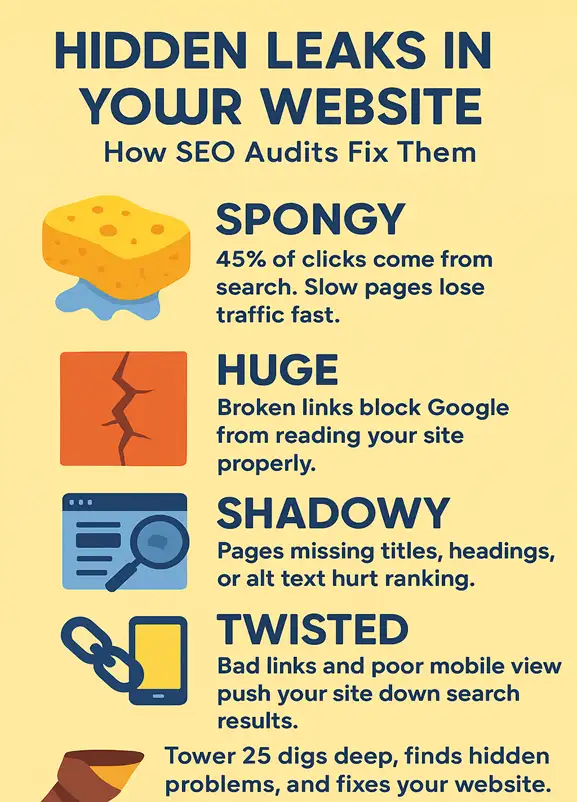
Nearly half of all clicks (about 45%) on search results come from organic search. That means almost 50% of all web visits start when someone types a question. If your site isn’t ready, you lose a big chance. Many sites never even make it to page two of results.
Could a simple check (an audit) find hidden problems? Could it show cracks, leaks, or slow parts in your site? Could it help your site stand tall and shine?
That’s what good SEO audit services do. They look under the surface. They find what you cannot see. They fix what you do not know is broken.
Suppose you want your site to stand firm (not feel spongy, heavy, or shadowy inside), you need a real check. Let’s explore how audits expose secrets. Let’s see why audits help. And let’s see how you can use them to build a stronger site.
Why Perform an SEO Audit Regularly
Websites change all the time. You add pages. You update images. You shift design. You tweak text. These changes can slowly make your site weak. That is why regular checks help.
A good audit looks at your site’s health: page speed, links, content, or structure. It finds problems before they become big.
Many site owners see big gains after real audits. Some report big jumps in traffic and visibility after clearing hidden faults.
If you never audit, small issues can pile up. Slow pages. Broken links. Bad pictures. These things can make search engines ignore your site. Or push people away fast.
Smart site owners run audits often (every few months, or after big site changes). This way, you catch leaks early before they drown your traffic.
What Tasks Does an SEO Audit Include
A full audit does not just peek. It inspects everything. It looks at many parts of your site to catch hidden flaws.
Here are what good audits check:
- Page speed and how fast your site loads.
- Broken links, missing pages, and redirect problems.
- Page titles, headings, metadata, alt text on images, and internal links.
- Link profile (good links vs bad or spammy links).
- Mobile view and user experience (how the site looks and works on phones).
A proper audit works like a health check for your website. You receive a clear list of what is wrong. Then you get real fixes. Without that, many problems stay hidden, like a leak behind a wall.
How to Choose the Right SEO Audit
Not all audits are equal. Some just glance at surface issues. Others dig deep. You want the deep kind.
Choose a provider that checks all the parts above, not just titles or content. Technical issues, links, speed, mobile — all matter.
Pick a service that gives clear reports. You should see what is wrong. You should know why it hurts you. And you should see what to do. If the report says only “make the site faster” with no details, stay away.
Trust services that give full, honest, and simple results. Services that shine a light on hidden problems. A deep audit finds the leaks fast and helps you fix them cleanly.
Can SEO Audits Improve Search Rankings
Yes. They really can.
Fixing hidden problems helps search engines read your site more easily. When you fix slow pages, broken links, bad links, or missing tags, your site becomes clean and strong.
Search engines like clean sites. They give them a better ranking. A better ranking means more people see you. More visitors. More chances to connect.
Good on-page work (titles, headings, or internal links) and a clean link profile help, too. You become stronger against the crowd. You stand out.
An audit is not a magic spell. But it gives you a strong base where growth becomes real.
How Often Should SEO Audits Be Done
Your site changes often. Pages added. Design changed. Images replaced. Text updated.
Because of this constant change, regular audits are wise. Many experts recommend looking at your site every 3–6 months or after big updates.
If you skip audits for a long time, small issues build up. Slowdowns. Broken links. Missing or wrong metadata. These hurt your site’s performance.
Regular audits prevent problems. They help you stay clean. They keep your site ready for growth.