You type your business name into Google, hoping to see yourself at the top. Instead, someone else takes that spot. It’s not a giant company or some well-known brand, just a competitor with a profile that’s on point. They’re sitting right there in the top three, catching every customer searching for exactly what you provide.
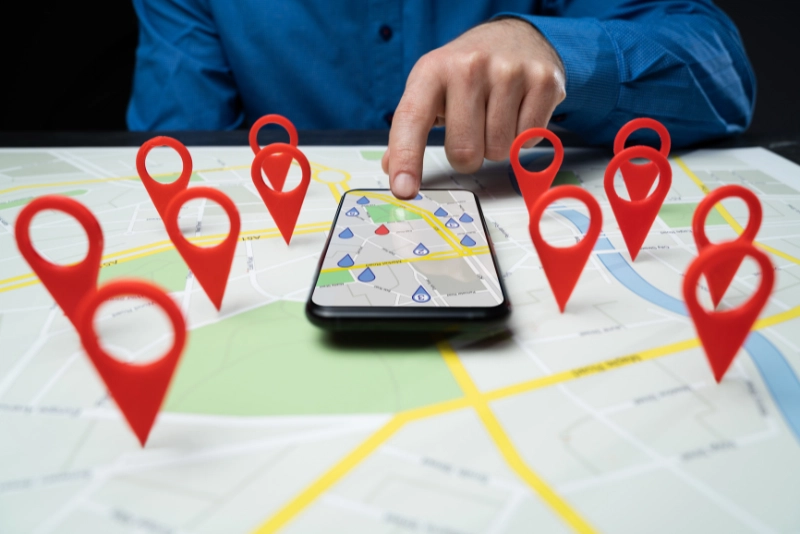
That top-three spot is called the local pack. It sits right above the usual search results and even above the ads, squarely in front of people who are ready to buy. The businesses you see there aren’t just lucky. They’ve used Google Maps SEO services to get in, and they work to stay there.
So, what does it actually take to claim that spot and hold onto it? Here’s how it works.
1. Why Does the Google Maps Local Pack Matter So Much?
Before you start thinking about strategy, it helps to know what’s really on the line. The local pack isn’t just a bonus feature; it’s where most local shoppers focus their attention.
According to a 2025 Google Maps Industry analysis, 42% of users click results from the local pack whenever it appears. That means one section on the page grabs almost half of all possible clicks. Businesses in the pack also see 126% more website traffic and 93% more actions, like calls, direction requests, and visits, compared to those sitting in spots four through ten.
The math is simple. If your business isn’t in the local pack, almost half the people searching for you won’t find you. A good Google Maps optimization service can change that completely.
2. What Does Google Actually Use to Rank Local Businesses?
Google looks at three main things to decide who shows up in the local pack: relevance, distance, and prominence. It sounds simple, but each one relies on a bunch of signals your profile may or may not be sending the right way.
Relevance comes down to how well your profile lines up with what people are actually looking for. Let’s say someone searches for “emergency plumber San Diego.” If your profile only lists “Home Services,” Google isn’t going to connect the dots. You’ve got to be specific about what you offer.
Distance is pretty clear. Google favors businesses that are closer to the person searching. You can’t pick up your shop and move it, but you can make sure your service area is crystal clear so Google knows exactly where you work.
Prominence is where most businesses either stand out or fade into the background. It’s all about how well-known and trusted you seem online. Google looks at your reviews, links from other sites, citations, how active your profile is, and even how your website ranks in organic search.
Darren Shaw and his research team conducted a study about local search ranking factors. They surveyed hundreds of local search experts. They found that your main Google Business Profile category is the top factor for making it into the local pack. Reviews also jumped in importance, growing from 16 percent of the ranking weight in 2023 to 20 percent in 2026. Your Google Business Profile and your reputation matter more for local rankings than your website does.
At Tower 25, our reputation management services focus on getting you more positive reviews, responding to feedback, and presenting your business in the best possible light online.
3. How Do You Optimize Your Google Business Profile the Right Way?
Your Google Business Profile is the engine that drives your Maps visibility. Every detail counts. Most businesses just fill in the basics and leave a ton of ranking potential untouched.
Here’s what a properly optimized profile looks like:
- Primary category. Go for the most specific category that truly fits what you do. “Personal Injury Attorney” will always work better than the vague “Law Firm.” This one decision impacts your rankings more than anything else.
- Additional categories. BrightLocal’s 2023 GBP Category Study found that businesses using four extra categories landed the highest average map ranking of 5.9. Add every category that fits what you do.
- Business description. Write it for the humans first. Include your city, your core services, and what makes you different. Keep it natural.
- Photos. High-quality, up-to-date photos get more clicks. Add pictures of your place, your team, and your products. Keep your gallery fresh.
- Google Posts. Treat this section like a mini social feed. Share promos, news, and updates. Staying active here tells Google your business is open and relevant.
- Q&A section. Post common customer questions and answer them yourself. This builds trust and helps your profile show up for more searches.
One thing most businesses overlook: your GBP website link should go to the page that’s most helpful for local customers, not just your homepage. If you have more than one location, each one needs its own page with unique content. Sending everyone to a generic page just confuses Google and can hold back your rankings.
4. Why Are Reviews a Business Map SEO Service on Their Own?
Reviews used to be a nice bonus. They’re now one of the most important levers in local search. Quantity, recency, star rating, and how you respond all feed into where you rank.
BirdEye’s research team dug into thousands of business profiles for their 2025 State of Google Business Profile report and found that in 2024, Google reviews made up 81 percent of all online review volume, up from 79 percent the year before. They also noticed that businesses that respond to reviews, even the positive ones, come across as more trustworthy to both people and Google’s algorithm. In late 2024, Google cracked down on fake reviews, removing thousands in one sweep. That move made it clearer; just having a pile of reviews isn’t enough. What matters now is that your reviews are genuine, recent, and that you’re actively involved with your customers.
So, what should you do?
- Make it easy for customers to leave a review. After every job or sale, send a direct Google review link. The fewer steps, the better.
- Respond to every review, good or bad. Even a quick “Thanks, we’re glad you had a great experience” counts as engagement in Google’s eyes.
- Never buy fake reviews. Google’s 2024 cleanse showed how risky that is. Getting banned isn’t worth a short-term bump.
- Aim for steady growth. Ten new reviews every month beats a one-time increase of fifty followed by silence. Consistency shows you’re trustworthy.
5. What Role Does Your Website Play in Google Maps Rankings?
Your website’s organic rankings have a direct impact on how you show up in Google Maps. Google looks at your whole online presence, and that includes how well your site does in regular search results.
So, technical SEO isn’t a separate task; it’s part of your Maps strategy. Here are a few things that matter most:
- Landing page alignment. Make sure the page your Google Business Profile links to include your business name, address, phone number, and your key services. Mention your city naturally throughout the content. Your website and your profile must tell the same story.
- LocalBusiness schema markup. Schema is structured data that helps Google read your site more clearly. Adding it puts you ahead of the vast majority of local competitors automatically.
- Mobile speed. Over 60% of local searches happen on a phone. If your site takes longer than three seconds to load, users bounce before they’ve read a word. That bounce behavior signals to Google that your site isn’t delivering value, and both your organic and Maps rankings suffer for it.
At Tower 25, we treat your website and your Maps profile as one connected system, not two separate projects. The businesses that win at local search are the ones that treat every part of their online presence as part of the same strategy.
6. How Do Local Citations Strengthen Your Maps Presence?
A citation is any time your business name, address, and phone number show up together on another website. Each mention signals to Google that your business is trustworthy.
Citations are the ground floor of your local credibility. They won’t flood you with customers overnight, but without them, your Google Maps marketing strategy doesn’t have anything to stand on.
Where should your business be listed?
- Core directories like Yelp, Apple Maps, Bing Places, Facebook, and Foursquare. For any local business, these are essential.
- Industry directories matter. Restaurants should be on TripAdvisor and OpenTable, contractors belong on Angi and HomeAdvisor, and lawyers should show up on Avvo and FindLaw. The goal is to appear where your customers are already looking.
The non-negotiable rule: every listing has to match your website and Google Business Profile exactly. Even small differences, like “St.” instead of “Street,” chip away at the trust you’re building.
That’s why Tower 25’s business map SEO services always start with a full citation audit. Cleaning up old or inconsistent info is one of the fastest ways to strengthen your Maps presence.